
Casement Windows
A casement window is hinged on one side and cranks open like a door. It catches side breezes, opens fully, and seals tightly when it's closed.
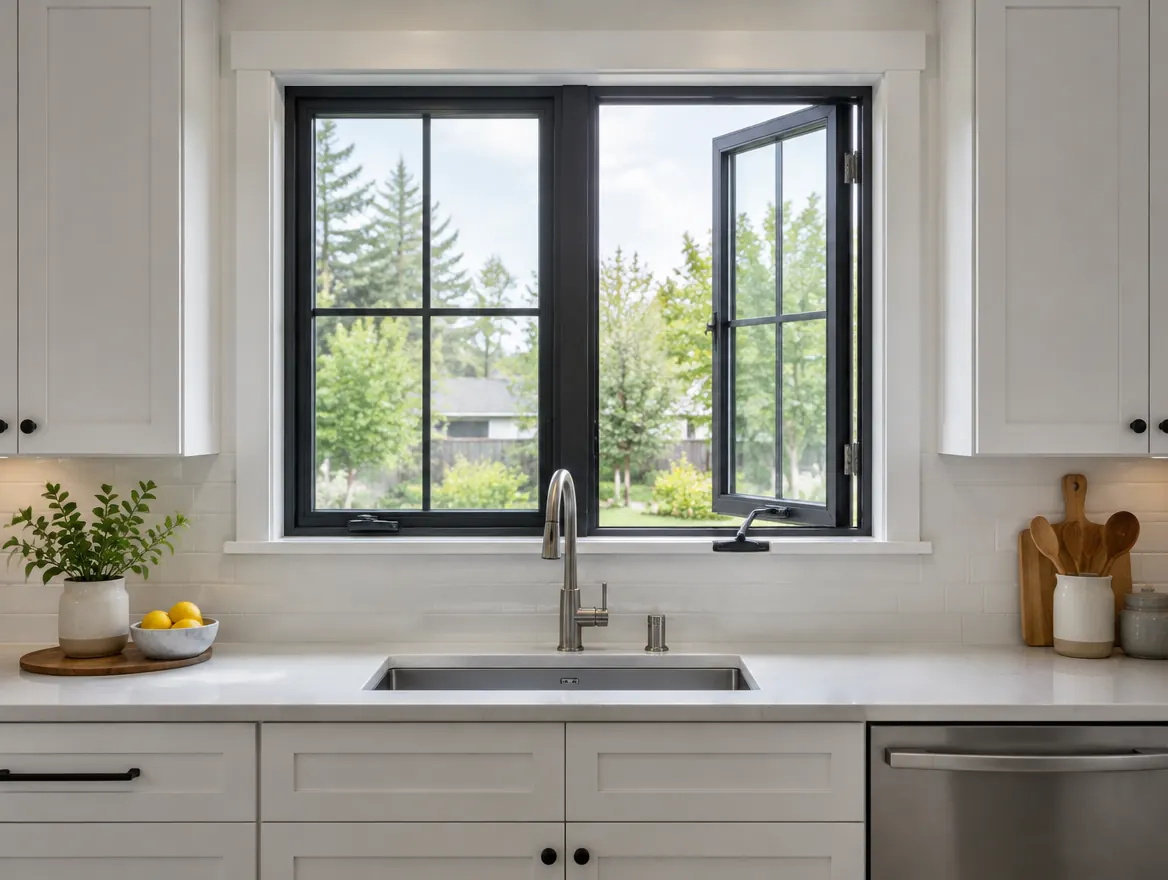
What is a casement window?
A casement window has a single sash hinged on its left or right side. Turn the crank and the sash swings outward, opening the full height of the window. There's no meeting rail in the middle of the glass, so the view stays clean and uninterrupted.
When you close a casement, the sash presses into the frame's weatherstripping and the locks pull it tight. That compression seal is why casements are among the most airtight operable windows you can buy, a real advantage when wind comes off the lake in January.
Because they're operated with a crank, casements are also easier to open where you can't get much leverage, like over a kitchen sink or behind a counter.
Why homeowners choose casement windows.
Tight seal
The sash closes against the frame like a door, which keeps drafts out.
Full ventilation
The whole sash opens and can scoop side breezes into the room.
Clear view
No rail across the middle, just one uninterrupted pane of glass.
Easy to reach
A crank handle is simple to use over sinks and countertops.
Is a casement window right for your home?
A great fit for
Kitchens
Easy to open over the sink without leaning or lifting.
Windy, exposed walls
The compression seal holds up well against wind.
Modern and contemporary homes
Clean, unbroken glass suits a simpler look.
Next to picture windows
Casements on each side add ventilation to a fixed center pane.
Good to know
Opens outward
Avoid casements where the open sash would block a walkway, deck or porch.
Screens are inside
The screen sits on the room side since the sash swings out.
Size limits
Very wide sashes get heavy, so large openings are usually split into several units.
Casement Windows: common questions
Something we didn’t cover? Call (630) 901-6361 and ask Anna directly.
Are casement windows better than double-hung?
Neither is better everywhere. Casements seal tighter and open fully, which is great for ventilation and windy walls. Double-hung windows don't swing out and suit traditional homes. Many houses use both, choosing room by room.
Can casement windows go in a bedroom?
Yes, and they're often a good choice for egress because the whole sash opens. The opening still has to meet local code for size and sill height, which we check before ordering.
Do casement cranks break easily?
Modern operators are much more durable than older ones. Opening and closing gently and keeping the hardware clean goes a long way, and replacement cranks are easy to swap if one wears out.
Which way should my casement window open?
Usually toward the prevailing breeze and away from anything the sash could hit, like a fence or a walkway. We'll recommend the hinge side for each opening during the estimate.
Other windows we install.
Get a free estimate on casement windows.
We’ll measure, walk you through options and send a written quote, usually within 48 hours. No pressure, no obligation.