
Double-Hung Windows
The classic American window: two sashes that both slide up and down and tilt in for cleaning. It suits almost any home in Chicagoland, from brick bungalows to new builds.
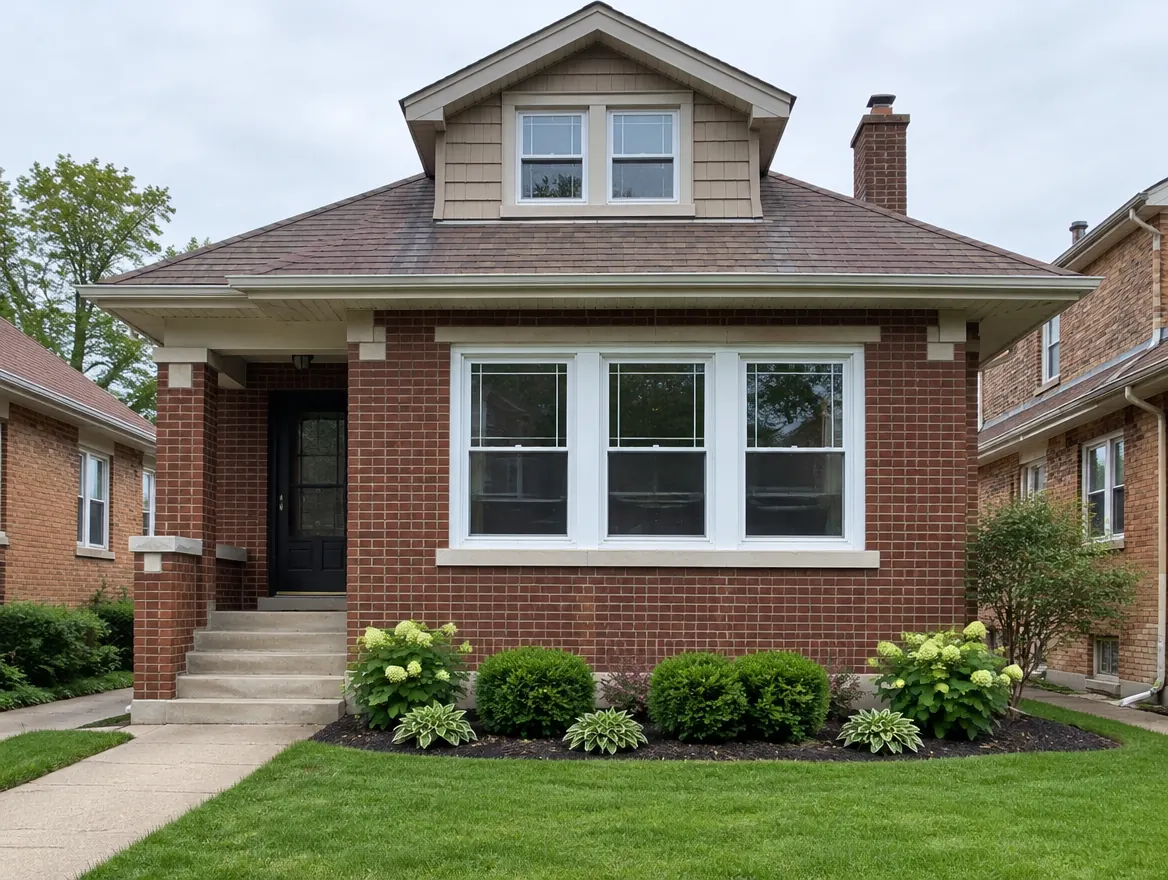
What is a double-hung window?
A double-hung window has two sashes, an upper and a lower, and both of them move. Slide the lower sash up, the upper sash down, or open both partway. Unlike a single-hung window, where only the bottom sash moves, a double-hung gives you full control over where air comes in.
That flexibility matters on hot summer days. Opening the top lets warm air escape near the ceiling while the bottom pulls cooler air in, a simple way to move air through a room without running the AC.
Most modern double-hung windows also tilt in. Release the latches and each sash pivots into the room, so you can wash the outside glass from inside the house. On a second floor, that alone is a reason many homeowners choose them.
Why homeowners choose double-hung windows.
Flexible airflow
Open the top, the bottom or both to control how air moves through the room.
Easy to clean
Tilt-in sashes let you clean both sides of the glass from inside.
Fits any style
The traditional look suits bungalows, colonials, Georgians and newer homes alike.
Out of the way
Nothing swings out, so they work next to walkways, decks and patios.
Is a double-hung window right for your home?
A great fit for
Bedrooms and living rooms
Where you want easy ventilation and a familiar look.
Upper floors
Tilt-in cleaning means no ladders for the outside glass.
Next to walkways and decks
The sashes slide instead of swinging into your path.
Traditional and historic homes
Grille patterns can match the original look of older Chicago homes.
Good to know
Slightly less airtight than casements
Sliding sashes seal well, but a casement's compression seal is tighter.
Only half the window opens
At most, one sash's worth of the opening is clear for airflow.
Very wide openings
Large openings are often filled with two or three units joined side by side.
Double-Hung Windows: common questions
Something we didn’t cover? Call (630) 901-6361 and ask Anna directly.
What's the difference between single-hung and double-hung windows?
On a single-hung window only the bottom sash moves; the top is fixed. On a double-hung both sashes move and usually both tilt in, which makes airflow and cleaning easier. Double-hung costs a little more but is the more popular choice for replacements.
Can you replace double-hung windows without removing the trim?
Often, yes. If the existing frame is square and sound, an insert replacement fits inside it and the interior trim stays in place. If the frame is rotted or out of square, a full-frame replacement is the better long-term fix. We'll check which applies during your free estimate.
Are double-hung windows energy efficient?
Yes. Modern double-hung windows with insulated frames, double- or triple-pane glass and Low-E coatings are a big step up from older single-pane or drafty wood windows, especially through a Chicago winter.
How do I clean tilt-in double-hung windows?
Unlock the window, raise the lower sash a few inches, slide the tilt latches on top of the sash inward and pivot it toward you. Do the same for the upper sash after lowering it. Clean the outside glass, then tilt them back until the latches click.
Other windows we install.
Get a free estimate on double-hung windows.
We’ll measure, walk you through options and send a written quote, usually within 48 hours. No pressure, no obligation.